Cabo San Lucas · La Paz · Baja California Sur
Whale Watching
From December through April, Pacific gray whales and humpbacks complete one of the longest mammal migrations on earth — up to 12,000 miles round-trip from Arctic feeding grounds to the warm lagoons of Baja California Sur (per NOAA). The waters between Cabo San Lucas and La Paz become one of the highest-density whale corridors in the world during peak season. Mother-calf pairs surface close enough to hear the exhale.
The Experience
Forty tons breaking the surface — nothing prepares you for it
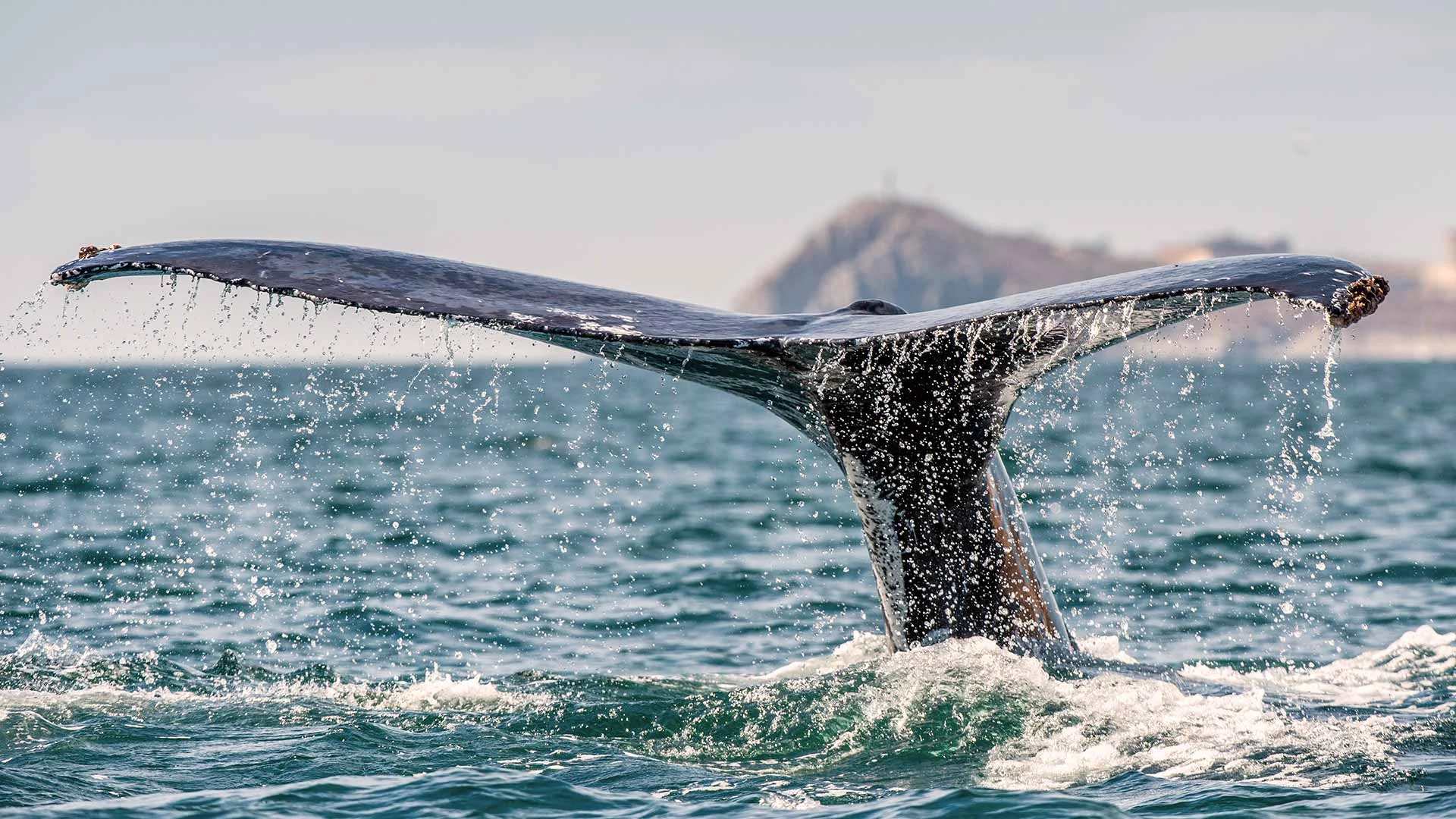
The boat slows. The guide signals quiet. You scan the water for the slick — that dark, oily circle where a whale has just exhaled beneath the surface — and then it happens: a mother rises alongside you, close enough to count the barnacles on her jaw. Her calf surfaces two seconds later, curious and impossibly small against her sixty-foot frame.
Baja California Sur hosts one of the most accessible whale watching corridors on earth. Pacific gray whales migrate from Arctic feeding grounds to the warm lagoons of the Pacific coast each winter — the same route, the same lagoons, for thousands of years. Humpbacks follow a parallel path, and from December through April the waters between Cabo San Lucas and La Paz become one of the highest-density whale corridors anywhere in the world (per CONANP, Mexico's National Commission of Natural Protected Areas).
Morning departures capture the calmer seas and best light. Naturalist guides narrate in English and Spanish — they know individual animals by fluke markings, the likely breach spots by current and temperature, and when to cut the engine so sound doesn't carry. What you take home isn't a photograph. It's the sound of that exhale.
Season & Timing
When is whale watching season in Cabo San Lucas?
Whale watching season in Cabo runs December through April, when Pacific gray whales and humpbacks migrate through Baja waters on one of the longest mammal migrations on earth — gray whales travel roughly 12,000 miles round-trip between Arctic feeding grounds and Baja lagoons (per NOAA).
Peak sightings occur January through March. Humpback whale breaches are most common in the morning hours before wind chop builds. Gray whale mother-calf pairs concentrate in the shallow lagoons of Magdalena Bay and Ojo de Liebre — accessible as day tours from La Paz — while offshore Cabo is the prime corridor for humpbacks and blues.
Start Planning
Your golden hour in Baja is waiting.
Get the full Best of Cabo travel guide — itineraries, insider picks, and the towns you shouldn't skip.